

The Unfiltered Reality of Hiring a Fiction Ghostwriter
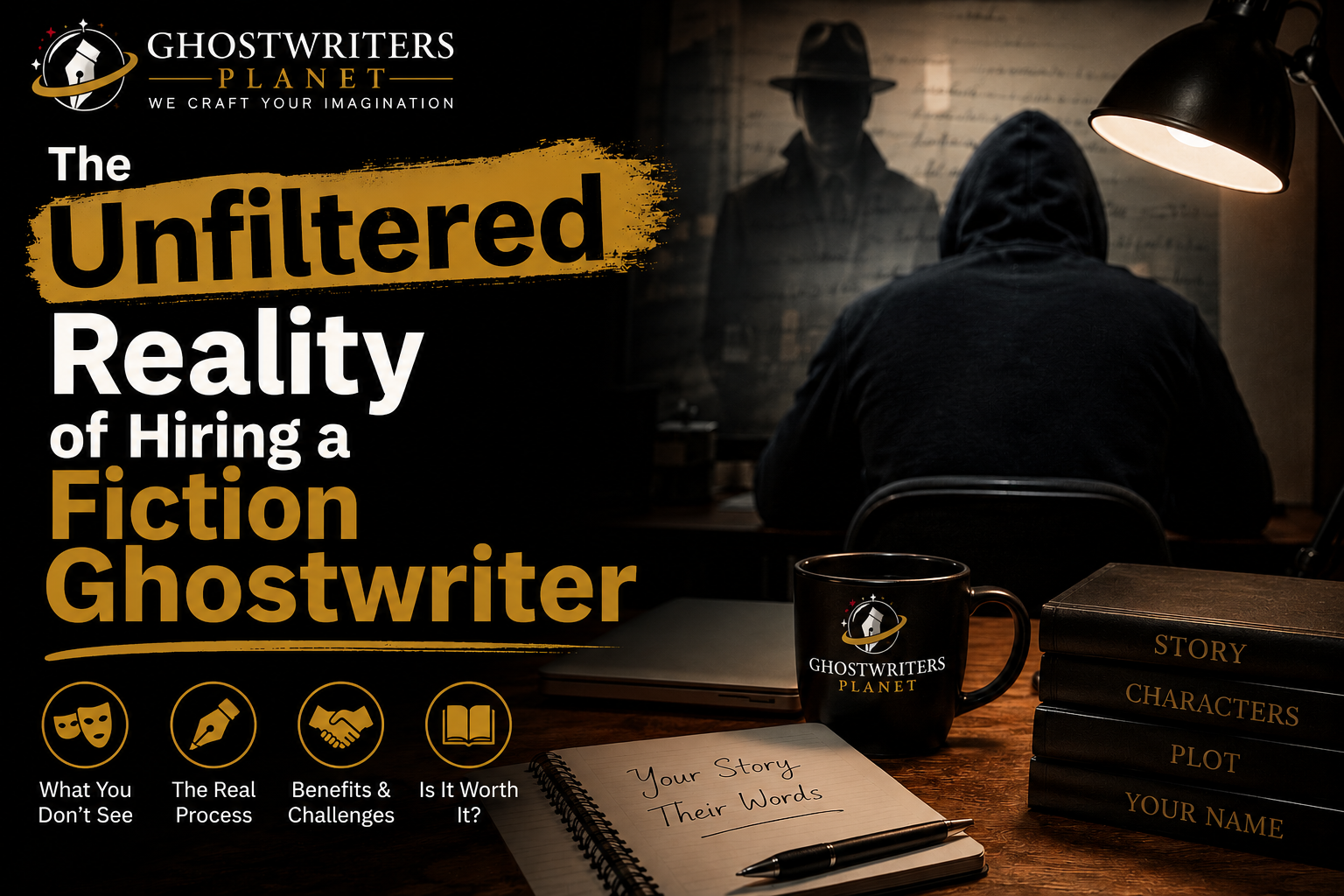
A writer I worked with possessed a great sci-fi premise. He mapped out the entire world and character backstories thoroughly. However, he lacked sufficient time to write eighty thousand words. So, he hired a cheap online freelancer for quick results. He paid eight hundred dollars and expected a fast draft. What he received back was an absolute textual disaster. It looked like unedited text generated by artificial intelligence. The prose felt lifeless, and dialogue sounded completely flat. Worse, the ghostwriter vanished when he asked for fixes. He lost money, wasted months, and felt totally defeated. Hiring fiction ghostwriting services requires immense trust from an author. You are giving your creative story concept to strangers. While talented professionals exist, the market contains underqualified writers. If you need fiction ghostwriting services, watch for warnings. Here are critical red flags to evaluate before paying deposits.
Prices That Are Too Good to Be True
High-quality fiction writing demands extensive research and drafting. Professional ghostwriters invest hundreds of hours into novel manuscripts. Offers to write full novels for tiny fees are suspicious. Extremely cheap pricing usually signals substandard work or automated content. Quality fiction requires deep dedication, structural planning, and effort. Promises to deliver finished epic novels very quickly trigger alarms. Fast turnarounds suggest heavy reliance on unedited artificial intelligence. Alternatively, the writer may deliver rushed, poorly structured work. Realistic timelines account for character development and necessary revisions. Speed should never supersede narrative coherence and atmospheric polish.
The Two-Week Novel Promise
Impossibly fast delivery schedules compromise overall narrative quality significantly. No writer produces deeply nuanced fiction from scratch in days. When turnarounds are rushed, character arcs suffer terrible damage. You end up reading robotic dialogue and glaring plot holes. Atmospheric worldbuilding details get completely erased during fast drafting. Standard novel drafting schedules require several solid working months. Three to six months allows proper plotting, drafting, and revising. If freelancers promise instant epic books, walk away immediately.
Generic Portfolios and Missing Genre Samples
Fiction genres possess unique structural expectations and narrative rhythms. Writing high fantasy requires vastly different skills than writing romance. A candidate offering generic samples may struggle with specific tropes. Requesting relevant samples reveals whether they understand your genre. Inability to provide genre-specific work warrants immediate and significant caution. Be wary when candidates offer excuse-laden explanations for missing samples. Confidentiality agreements prevent sharing complete client books in such cases. However, professionals can easily provide anonymous excerpts or samples. Evaluating prose quality, pacing, and dialogue authenticity remains essential. Ensure the writer demonstrates genuine command over narrative voice.
Ghosting During Initial Consultations
Pay close attention to preliminary candidate communication during discussions. Collaborative partnerships require frequent check-ins, milestone updates, and feedback. Delayed email responses during preliminary discussions signal future problems. Missing scheduled consultation calls reflect poor professional standards consistently. Inconsistent communication creates anxiety and stalls creative momentum unnecessarily. Pay close attention to how carefully candidates read project briefs. Writers who ignore specific story requirements often produce disappointing work. A professional asks probing questions about plot and character motivation. Active listening indicates genuine investment in bringing your vision to life. Communication breakdowns during initial negotiations compound during manuscript drafting.
Hesitation Around Signing NDAs
Protecting original concepts is vital when sharing unpublished story ideas. Respectable fiction ghostwriters sign standard non-disclosure agreements without hesitation. Reluctance to execute an NDA before reviewing outlines is problematic. Refusal to sign safety documents suggests disregard for client confidentiality. Your unique worldbuilding elements and plot twists require immediate protection. An NDA ensures your plot outline remains strictly your property. It prevents freelancers from repurposing your premise for other clients. Legitimate agencies and independent writers understand standard industry privacy. Walk away immediately if a prospective writer resists confidentiality terms. Safeguarding your intellectual property must always remain your highest priority.
Zero Willingness to Take Feedback
Ghostwriting requires setting aside personal ego to serve client vision. The finished novel must reflect your preferred style and tone. A writer who reacts defensively to constructive feedback causes frustration. Refusing reasonable revision requests violates the fundamental nature of ghostwriting. Flexibility and adaptability are essential traits for successful professional ghostwriters. Your agreement should specify a defined number of revision rounds. Clear terms protect both parties from endless uncompensated rewrite cycles. Avoid writers who insist their initial draft requires zero modification. Collaboration thrives on open dialogue and dedication to narrative quality. Select a writing partner who welcomes collaborative refinements enthusiastically.
Absence of Structured Milestone Approvals
Professional ghostwriting projects demand structured milestone approvals throughout drafting. Never hire freelancers insisting on delivering complete manuscripts at once. Breaking project drafting into sections prevents massive structural narrative mistakes. Reviewing initial chapters early ensures tone alignment before writing continues. Working without clear milestone reviews leads to wasted financial resources. Established ghostwriters schedule clear delivery dates for every manuscript chapter. This structured approach protects your budget and maintains project momentum. Writers rejecting milestone check-ins often produce unstructured and chaotic books. Always demand a transparent schedule before signing binding professional agreements.
Misalignment on Narrative Voice and Tone Control
Capturing authentic character voices requires deep artistic intuition and skill. Ghostwriters enforcing rigid personal styles destroy subtle character nuances. Your story characters must speak naturally while reflecting unique backgrounds. A red flag appears when candidate sample chapters feel robotic. Professional freelancers adapt effortlessly to your preferred narrative style options. Pay close attention to dialogue rhythms during early project reviews. Characters should sound distinct rather than repeating identical phrasing patterns. If a ghostwriter resists dialogue adjustments, proceed with extreme caution. Your main protagonist deserves a memorable voice matching your vision. Never settle for bland prose that flattens your story personality.
Lack of Familiarity With Genre-Specific Tropes
Every fiction genre relies on specific narrative conventions and expectations. A romance novel requires compelling emotional chemistry between central characters. Science fiction stories demand coherent technological systems and believable worldbuilding. Writers unfamiliar with your genre often miss crucial story beats. This ignorance results in flat pacing and disappointing reader experiences. Always evaluate candidate experience within your specific literary genre niche. Ask prospective writers how they plan to execute essential genre tropes. Inability to discuss genre conventions signals potential story development problems. Hire specialists who deeply understand what genre readers expect daily.
Final Thoughts for Authors
Hiring a ghostwriter ultimately relies on mutual professional trust. Always trust your personal instincts during preliminary hiring discussions. Question suspicious pricing, vague contract language, or poor communication habits. Protecting your story idea ensures finding the right ghostwriting partner.A writer I worked with possessed a great sci-fi premise. He mapped out the entire world and character backstories thoroughly. However, he lacked sufficient time to write eighty thousand words. So, he hired a cheap online freelancer for quick results. He paid eight hundred dollars and expected a fast draft. What he received back was an absolute textual disaster. It looked like unedited text generated by artificial intelligence. The prose felt lifeless, and dialogue sounded completely flat. Worse, the ghostwriter vanished when he asked for fixes. He lost money, wasted months, and felt totally defeated. Hiring fiction ghostwriting services requires immense trust from an author. You are giving your creative story concept to strangers. While talented professionals exist, the market contains underqualified writers. If you need fiction ghostwriting services, watch for warnings. Here are critical red flags to evaluate before paying deposits.
Prices That Are Too Good to Be True
High-quality fiction writing demands extensive research and drafting. Professional ghostwriters invest hundreds of hours into novel manuscripts. Offers to write full novels for tiny fees are suspicious. Extremely cheap pricing usually signals substandard work or automated content. Quality fiction requires deep dedication, structural planning, and effort. Promises to deliver finished epic novels very quickly trigger alarms. Fast turnarounds suggest heavy reliance on unedited artificial intelligence. Alternatively, the writer may deliver rushed, poorly structured work. Realistic timelines account for character development and necessary revisions. Speed should never supersede narrative coherence and atmospheric polish.
The Two-Week Novel Promise
Impossibly fast delivery schedules compromise overall narrative quality significantly. No writer produces deeply nuanced fiction from scratch in days. When turnarounds are rushed, character arcs suffer terrible damage. You end up reading robotic dialogue and glaring plot holes. Atmospheric worldbuilding details get completely erased during fast drafting. Standard novel drafting schedules require several solid working months. Three to six months allows proper plotting, drafting, and revising. If freelancers promise instant epic books, walk away immediately.
Generic Portfolios and Missing Genre Samples
Fiction genres possess unique structural expectations and narrative rhythms. Writing high fantasy requires vastly different skills than writing romance. A candidate offering generic samples may struggle with specific tropes. Requesting relevant samples reveals whether they understand your genre. Inability to provide genre-specific work warrants immediate and significant caution. Be wary when candidates offer excuse-laden explanations for missing samples. Confidentiality agreements prevent sharing complete client books in such cases. However, professionals can easily provide anonymous excerpts or samples. Evaluating prose quality, pacing, and dialogue authenticity remains essential. Ensure the writer demonstrates genuine command over narrative voice.
Ghosting During Initial Consultations
Pay close attention to preliminary candidate communication during discussions. Collaborative partnerships require frequent check-ins, milestone updates, and feedback. Delayed email responses during preliminary discussions signal future problems. Missing scheduled consultation calls reflect poor professional standards consistently. Inconsistent communication creates anxiety and stalls creative momentum unnecessarily. Pay close attention to how carefully candidates read project briefs. Writers who ignore specific story requirements often produce disappointing work. A professional asks probing questions about plot and character motivation. Active listening indicates genuine investment in bringing your vision to life. Communication breakdowns during initial negotiations compound during manuscript drafting.
Hesitation Around Signing NDAs
Protecting original concepts is vital when sharing unpublished story ideas. Respectable fiction ghostwriters sign standard non-disclosure agreements without hesitation. Reluctance to execute an NDA before reviewing outlines is problematic. Refusal to sign safety documents suggests disregard for client confidentiality. Your unique worldbuilding elements and plot twists require immediate protection. An NDA ensures your plot outline remains strictly your property. It prevents freelancers from repurposing your premise for other clients. Legitimate agencies and independent writers understand standard industry privacy. Walk away immediately if a prospective writer resists confidentiality terms. Safeguarding your intellectual property must always remain your highest priority.
Zero Willingness to Take Feedback
Ghostwriting requires setting aside personal ego to serve client vision. The finished novel must reflect your preferred style and tone. A writer who reacts defensively to constructive feedback causes frustration. Refusing reasonable revision requests violates the fundamental nature of ghostwriting. Flexibility and adaptability are essential traits for successful professional ghostwriters. Your agreement should specify a defined number of revision rounds. Clear terms protect both parties from endless uncompensated rewrite cycles. Avoid writers who insist their initial draft requires zero modification. Collaboration thrives on open dialogue and dedication to narrative quality. Select a writing partner who welcomes collaborative refinements enthusiastically.
Absence of Structured Milestone Approvals
Professional ghostwriting projects demand structured milestone approvals throughout drafting. Never hire freelancers insisting on delivering complete manuscripts at once. Breaking project drafting into sections prevents massive structural narrative mistakes. Reviewing initial chapters early ensures tone alignment before writing continues. Working without clear milestone reviews leads to wasted financial resources. Established ghostwriters schedule clear delivery dates for every manuscript chapter. This structured approach protects your budget and maintains project momentum. Writers rejecting milestone check-ins often produce unstructured and chaotic books. Always demand a transparent schedule before signing binding professional agreements.
Misalignment on Narrative Voice and Tone Control
Capturing authentic character voices requires deep artistic intuition and skill. Ghostwriters enforcing rigid personal styles destroy subtle character nuances. Your story characters must speak naturally while reflecting unique backgrounds. A red flag appears when candidate sample chapters feel robotic. Professional freelancers adapt effortlessly to your preferred narrative style options. Pay close attention to dialogue rhythms during early project reviews. Characters should sound distinct rather than repeating identical phrasing patterns. If a ghostwriter resists dialogue adjustments, proceed with extreme caution. Your main protagonist deserves a memorable voice matching your vision. Never settle for bland prose that flattens your story personality.
Lack of Familiarity With Genre-Specific Tropes
Every fiction genre relies on specific narrative conventions and expectations. A romance novel requires compelling emotional chemistry between central characters. Science fiction stories demand coherent technological systems and believable worldbuilding. Writers unfamiliar with your genre often miss crucial story beats. This ignorance results in flat pacing and disappointing reader experiences. Always evaluate candidate experience within your specific literary genre niche. Ask prospective writers how they plan to execute essential genre tropes. Inability to discuss genre conventions signals potential story development problems. Hire specialists who deeply understand what genre readers expect daily.
Final Thoughts for Authors
Hiring a ghostwriter ultimately relies on mutual professional trust. Always trust your personal instincts during preliminary hiring discussions. Question suspicious pricing, vague contract language, or poor communication habits. Protecting your story idea ensures finding the right ghostwriting partner.
limited Time offer
- 00
- 00
- 2